Why jebel akhdar autumn belongs on your Oman itinerary
Autumn on the Green Mountain in Oman feels quietly cinematic. As the high mountain air cools over jebel Akhdar, the light sharpens and the terraces empty of spring crowds, giving families and couples rare space to breathe. This is the best time for travellers who want the drama of a high plateau without chasing the brief weeks when roses bloom.
The jebel Akhdar plateau sits around 2 000 metres above sea level, so from October the temperature usually ranges between 5 and 18 °C and the night can feel surprisingly crisp. That cool air changes how you move through the mountain, because a mid morning hike along the terraces above the wadi is suddenly comfortable rather than punishing, and children manage the gradients with far less complaint. For many guests using myomanstay.com to plan Oman travel, this shoulder season becomes the smart time to visit before the winter rush quietly pushes rates higher.
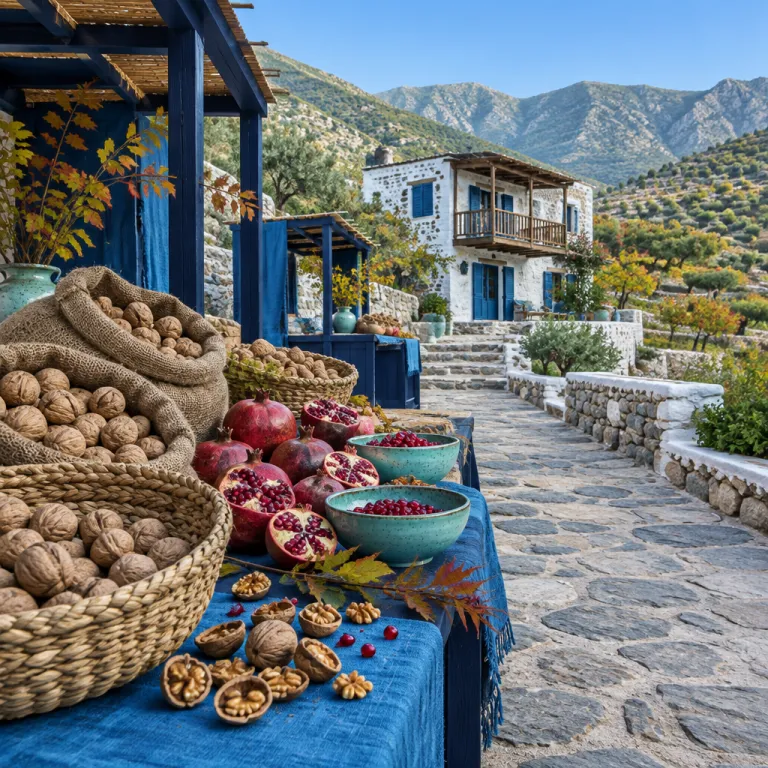
Spring belongs to damask roses and rose water distilleries, but jebel Akhdar autumn belongs to harvest and to silence. The terraces that step down towards each wadi are still green with walnut trees and pomegranate orchards, and the sound of running water in the aflaj channels feels louder once the tour buses thin. If your journey takes you from Muscat up the mountain road in late afternoon, you reach the saiq plateau just as the sun drops behind jebel Shams and the abandoned village silhouettes of Bani Habib and Ash Shirayjah turn a deep, theatrical bronze.
Walnut stalls, pomegranate trails and quiet mountain villages
By October, the Green Mountain shifts from rose petals to shells of fresh walnuts. Roadside stalls appear along the main road across the saiq plateau, where Omani families sell bags of nuts harvested from their own walnut trees, and this simple exchange often becomes a highlight for children who rarely see a mountain harvest up close. A slow Oman tour in jebel Akhdar autumn lets you stop at three or four of these stalls, compare flavours, and talk about how the cool night air shapes the crop.
Later in the season, pomegranates take over the terraces, their skins mottled and matte rather than glossy, and the fruit tastes tart and layered instead of simply sweet. Walking the path that links the village of Ash Shirayjah with the abandoned village of Bani Habib, you pass under trees heavy with fruit, while the wadi below carries just enough water to keep the terraces green without drowning the stone paths. Families who usually book short, guided tours find that in this season a self guided wander between villages is safe, intuitive, and often the top memory of their time in akhdar Oman.
For a deeper village stay, look for luxury properties that frame these agricultural rhythms rather than isolate you from them. One of the most refined options is the cliffside retreat featured in our guide to elevated luxury above Oman’s grand canyon, where every room faces the mountain and the terraces rather than the car park. From there, short Oman travel drives take you to Birkat Mouz at the base of the road, to the wadi Bani Awf region on the far side of the range, or even across to jebel Shams if your journey takes in both of Oman’s great highland plateaus.
How luxury mountain stays feel different in the autumn cold
Cliff edge resorts on jebel Akhdar read very differently once the temperature drops. In summer they are marketed as an escape from Muscat heat, but in jebel Akhdar autumn they become true mountain retreats where you reach for a blanket at night and the fire pit replaces the infinity pool as the social centre. Families who usually book coastal suites in Oman quickly realise that a couple of nights on the Green Mountain can anchor an entire journey.
On the saiq plateau, the best time to sit outside is often late afternoon, when the sun softens and the terraces below glow green against the darker rock. This is when you see how the water channels feed each level, how the trees are planted to shade crops beneath, and how the village paths knit everything together in a way that no blog or brochure fully captures. After dark, the night sky feels close and sharp, and even children who are used to city light pollution notice how the stars sit above every wadi and ridge.
Pairing the mountain with the coast works especially well in this season, because the contrast between cool nights and warm sea days feels deliberate rather than improvised. Many travellers start with a refined coastal palace such as the property we review in depth in our feature on a coastal palace stay in Muscat, then drive the mountain road up to akhdar green terraces for two or three nights. That road journey takes around two hours from Muscat, and the shift from sea level palms to high mountain trees and stone villages gives a clear narrative arc to your Oman tour.
Planning your jebel akhdar autumn stay: timing, layers and pairings
For most travellers, the best time to visit jebel Akhdar in autumn runs from early October into late November. Temperatures on the Green Mountain are cool but manageable for children, walnut stalls still line the road, and pomegranate harvest in villages like Ash Shirayjah and Bani Habib is in full swing. If your time to visit Oman is limited, two nights on the saiq plateau usually gives enough space for one long hike, one slow village morning, and one night under a very clear sky.
Packing for this season requires more thought than a simple beach break, because the night can drop close to single digits even when Muscat still feels warm. Plan for layered clothing, with light pieces for daytime Oman travel and a proper jacket for evenings on the terraces or by the fire pit, and remember that children feel the cold faster when they stop moving. Good footwear matters on stone paths between each village and wadi, especially if you plan to explore the abandoned village ruins or walk down to viewpoints above wadi Bani Awf.
Many guests pair the Green Mountain with a coastal stay at Al Mouj Muscat, where our guide to refined oceanfront stays in Muscat helps you choose the right property for your family. From there, you can add a day trip to wadi Shab for a different kind of water and rock landscape, then loop back inland for a final night on jebel Akhdar before flying out. This sequence keeps driving times reasonable, gives children a clear rhythm of mountain then sea, and shows you why akhdar Oman in autumn quietly outperforms the short weeks when roses bloom and every Oman tour coach crowds the same narrow road.
FAQ
Is autumn really a better time than the rose season for jebel Akhdar ?
For many travellers, jebel Akhdar autumn is more rewarding than the brief rose season because the plateau is cooler, quieter, and focused on real village life rather than a single spectacle. The rose harvest lasts only a few weeks, while walnut and pomegranate seasons stretch across much of October and November. If you value space on the terraces, easier hotel availability, and more relaxed tours, autumn is usually the better time to visit.
How cold does it get at night on the Green Mountain in autumn ?
On the saiq plateau around 2 000 metres, autumn night temperatures often fall close to single digits, especially from late October onwards. During the day you may still walk comfortably in light clothing, but once the sun drops behind the mountain ridge you will want a warm layer and closed shoes. Luxury properties usually provide blankets and sometimes outdoor heaters, yet packing your own jacket remains essential.
Is jebel Akhdar suitable for families with younger children in this season ?
Yes, jebel Akhdar in autumn works very well for families, because the cooler air makes short hikes between villages manageable for younger children. Many terraces have clear, stepped paths and the main viewpoints are accessible by car, so you can adjust the level of effort each day. Road access is restricted to 4x4 vehicles for safety, but your hotel or tour operator will arrange this if you do not plan to drive yourself.
How many nights should I plan on the mountain compared with the coast ?
A balanced Oman itinerary in autumn usually includes two or three nights on jebel Akhdar and three or four nights on the coast around Muscat. That gives enough time for one or two mountain hikes, a visit to villages such as Ash Shirayjah or Bani Habib, and at least one day by the sea or at a wadi like wadi Shab. If your journey is shorter, prioritise two nights on the Green Mountain so you experience both a sunset arrival and a clear, cool morning.
Can I combine jebel Akhdar with jebel Shams and still keep driving times reasonable ?
Combining jebel Akhdar with jebel Shams is possible, but you should allow at least one full day for the transfer between the two mountain regions. The journey takes several hours on mountain and valley roads, and you will want time to stop at viewpoints and villages rather than rush. For most first time visitors, pairing the Green Mountain with Muscat and perhaps one wadi such as wadi Shab or the wadi Bani Awf area offers a more relaxed rhythm.