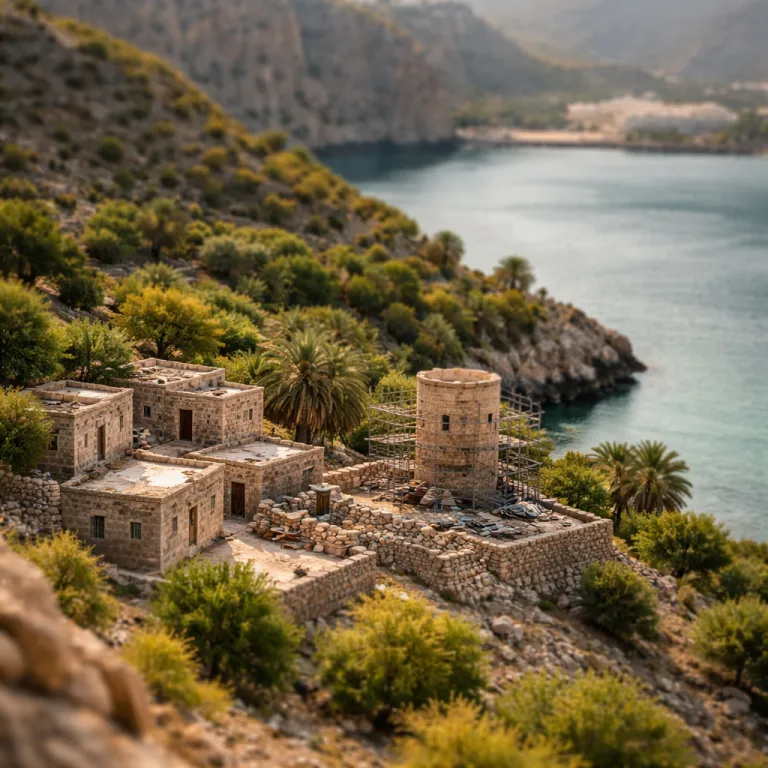
Ras Amud and the new scale of sustainable luxury in Musandam
On the Musandam peninsula, a new high-end coastal hideaway scheduled for 2026 called Ras Amud is quietly resetting expectations for luxury stays in Oman. With just 32 villas confirmed in early developer briefings from Discover Collection, this intimate resort is being positioned as a test case for how environmental restoration can sit at the centre of a resort business model, not as a decorative add on for marketing. For travellers comparing boutique hotels across northern Oman, that villa count matters because it defines how much coastline, freshwater and staff attention each guest can reasonably expect.
In a region where large properties often stretch along the bay with 80 or more rooms, Ras Amud’s smaller scale contrasts sharply with the 82 villas at Six Senses Zighy Bay, widely cited by operators and media as the reference point for a Musandam luxury escape. That difference is not just about privacy; it is about the math of restoration, because fewer villas mean less pressure on marine ecosystems and less strain on water resources in this arid corner of the Middle East. For solo travellers who value space and silence, the promise is a more private experience without sacrificing access to serious wellness infrastructure, curated dining and guided excursions.
Discover Collection has framed Ras Amud as a place where seclusion, wellness and Omani heritage are inseparable from the luxury proposition. That aligns with Oman’s national tourism strategy, which in recent public documents and ministry briefings talks explicitly about environmental restoration and nature-positive tourism rather than generic sustainability, and it places this Musandam retreat in a different category from many popular resorts that still rely on checklists and certifications. In line with those policy signals, internal concept notes for Ras Amud refer to targets such as at least 30 percent water reuse on site and transparent reporting of emissions per occupied room night, benchmarks that will allow guests to test whether the resort’s operations, from private pool filtration to energy use in the rooms, genuinely reflect that restoration language once the property opens.
Why Musandam is not Muscat or Jabal Akhdar with fjords
Musandam’s geography is structurally different from the rest of Oman, and any Musandam luxury resort opening in 2026 that ignores this will feel generic. The peninsula is carved into fjord like inlets that drop steeply into the sea, unlike the terraced orchards of Jabal Akhdar in the Hajar Mountains or the broad coastal sweep around Muscat and its urban luxury hotels. That topography shapes everything from how a resort positions its infinity pool to how it manages boat traffic in the bay below.
Six Senses Zighy Bay proved that a remote Musandam resort could become one of the most popular luxury properties in the Middle East, with guests arriving by speedboat, paragliding or a dramatic mountain road that crosses the UAE Oman border. Its 82 villas, many with a private pool, set a benchmark for barefoot luxury that Ras Amud will inevitably be measured against, especially for travellers who already know brands such as Anantara, Alila and The Chedi Muscat. According to the resort’s published information, activities at Zighy Bay include private dhow cruises, spa treatments and cultural excursions, which together define the current standard for high-end coastal experiences in the peninsula.
Ras Amud enters this landscape as a smaller, more surgical presence on the Musandam coastline, and that is where its positioning as a low-density luxury hideaway becomes interesting. Where a Muscat resort such as The Chedi Muscat leans into urban ease and linear beachfront pools, and where mountain properties like Alila Jabal Akhdar or Anantara Jabal Akhdar stretch along the cliff edge, Musandam demands a tighter footprint between rock and water. For travellers planning an Oman itinerary that might also include Alila Hinu Bay or other coastal properties, Musandam is not a substitute for Jabal Akhdar or Hinu Bay; it is a complementary chapter that adds fjords, dhow routes and a different kind of silence to the journey.
Solo explorers weighing where to allocate budget between Muscat, Jabal Akhdar and Musandam should think in terms of contrasts, not duplication. A stay at a Musandam luxury hideaway such as Ras Amud or an established property like Six Senses Zighy Bay gives you sea facing villas, private pools and direct access to the Musandam peninsula’s marine life, while time in Muscat offers refined city based dining and easier access to cultural sites. For a deeper look at coastal sophistication before or after Musandam, myomanstay.com’s guide to elegant hotels in Muscat, Oman is a useful benchmark for understanding how bay front properties in the capital differ from fjord facing resorts in northern Oman.
From green claims to restoration: what travellers should ask before booking
Oman’s tourism strategy now talks about environmental restoration, and that shift changes how a Musandam luxury retreat planned for 2026 will be judged by informed travellers. Restoration means more than efficient air conditioning in the rooms or a token infinity pool fed by desalinated water; it implies active work on carbon reduction, water reuse and marine habitat protection along the Musandam peninsula. For solo travellers who care about impact, the right questions at booking stage are no longer optional.
At Ras Amud, the 32 villa scale offers a starting point for credible restoration because it limits the number of private pools, vehicles and boat movements that the resort must manage. By comparison, a larger resort such as Six Senses Zighy Bay, with its 82 villas and multiple dining venues, has to work harder to balance guest expectations for the best luxury experience with the realities of resource use, even as it remains one of the most influential properties in high end travel in Musandam. The resort’s own descriptions highlight a mix of dining options, from a mountaintop restaurant to casual beachfront venues, which illustrates the operational footprint that any serious eco-conscious resort must now account for.
For travellers, the practical move is to interrogate how any Musandam luxury hotel handles three pillars: carbon, water and marine life. Ask whether the resort tracks emissions per occupied room night, how it treats and reuses water from each private pool, and what limits it sets on motorised excursions in the bay to protect coral and dolphin populations. When comparing Musandam with other Oman luxury options such as Alila Hinu Bay on the south coast, or a city stay that might echo the refined coastal style of properties reviewed in myomanstay.com’s piece on elegant stays by the sea in the region, look for concrete restoration projects rather than broad sustainability language.
It is also worth reading how established brands in Oman, from Anantara Jabal Akhdar in the Hajar Mountains to urban icons like The Chedi Muscat or regional peers such as The Ritz Carlton, articulate their environmental commitments, because that gives context for what Ras Amud must deliver to stand out. Solo explorers planning multi stop travel across northern Oman can then decide whether to balance a Musandam luxury escape with time in the mountains or along the Dhofar coast, using tools like myomanstay.com’s comparison of wadis at the emerald pool question to understand how water scarcity shapes every property’s operations. In a market where sustainable language is now standard, the properties that will earn long term loyalty are those where the bay is cleaner, the reefs are healthier and the silence at night feels like the real definition of luxury.