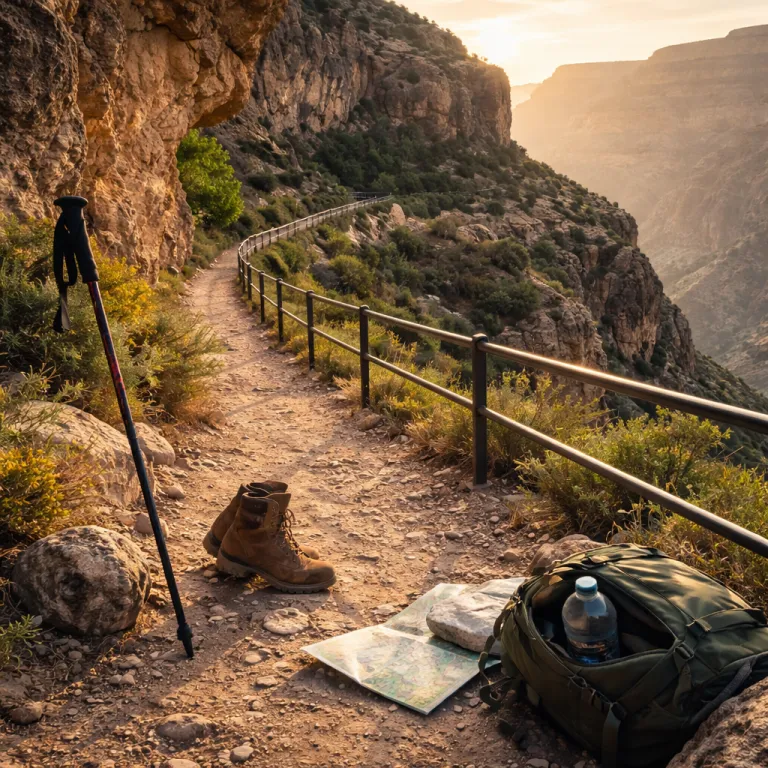
The jebel shams balcony walk as Oman’s defining canyon rim experience
The jebel shams balcony walk is the hike every serious Oman traveler hears about. Along the canyon rim above wadi ghul, the trail threads a ledge that feels suspended between mountain and sky, with views that reset your sense of scale. For solo travelers choosing a luxury base in the hajar mountains, understanding this walk in detail will shape where you sleep, when you start, and how you plan the rest of your trip.
Jebel Shams is Oman’s highest accessible mountain plateau, often called the grand canyon of Arabia for the way its cliffs plunge into the vast wadi ghul amphitheatre. From the village Khitaym (also written Khitaym/Khitam on some maps), the balcony walk follows an old walk trail used by goat herders towards an abandoned village tucked into the rock, with the canyon rim dropping hundreds of metres to the wadi floor. The full trail length is around 9 km return with roughly 400 metres of elevation change, which means most people will need about three and a half hours of steady hiking, a figure echoed by specialist Oman hiking guides and the Oman Ministry of Heritage and Tourism in their printed trail descriptions and on-site signage.
This is not a technical hike jebel route, but it is exposed, and the combination of altitude, heat and vertigo makes it more serious than many travel blogs suggest. The official hiking guidance on local information boards is clear: “Is the Balcony Walk suitable for beginners? Yes, with basic fitness and no fear of heights.” That line, quoted from regional tourism material, is accurate, yet it hides the reality that the best views come where the path narrows and the drop into wadi ghul feels immediate, so solo travelers should treat the shams balcony section with the same respect they would give any alpine balcony in Europe.
Trail specs, route finding and why solo travelers underprepare
On paper, the balcony walk looks simple for independent people who already enjoy hiking. You start at the rough parking area near village Khitaym, pick up the painted markers and follow the contour along the canyon rim towards the abandoned village, then return the same way. The official duration of 3 to 4 hours sounds like a relaxed half day, but in practice solo travelers often underestimate the exposure, the broken rock underfoot and the way the mountain wind can sap energy at over 2 000 metres.
The first kilometre of the walk jebel shams trail is relatively obvious, with stone cairns and paint flashes leading you along the balcony. Beyond that, the route weaves between boulders and ledges, and the markings thin out, which is where many people slow down to check the line or wait for others. This is why local guides still have a role here: regional tourism offices and on-site operators consistently note that local guides offer assistance, and on busy days you will see them quietly shepherding small hiking groups past the more confusing sections and pointing out the safest ledges.
From a planning perspective, treat the jebel shams balcony walk as a 9 km mountain hike rather than a casual stroll, even if you are fit. Start early to avoid the heat building in the oman grand interior, carry more water than you think you will drink, and wear sturdy footwear with good grip for the broken limestone. For solo travelers, the best travel tips are simple: tell your hotel or shams resort reception when you expect to be back, keep your phone charged but do not rely on signal, and remember that the most dramatic views are still there if you turn back before the final scramble into the abandoned village.
Where to sleep: luxury bases for the balcony walk and beyond
Choosing the right luxury hotel in Oman for this hike is less about marble and more about logistics. The balcony walk trailhead at village Khitaym sits on the jabal shams plateau, reached by a steep mountain road that rewards early starts and confident driving. Many travelers base themselves slightly lower in the hajar mountains, using refined properties as a cool, quiet base camp for both the jebel shams canyon and the newer via ferrata routes in jebel akhdar.
Alila Jabal Akhdar is the most strategic luxury choice for people who want both the balcony walk and the jebel akhdar via ferrata expansion in one itinerary. The resort sits on its own canyon rim with views that rival the oman grand landscapes of wadi ghul, and in practice you can reach the jebel shams area in around ninety minutes by private 4WD transfer or self-drive, then return to a heated pool and serious Omani cuisine. Anantara Al Jabal Al Akhdar offers a more resort like feel with a larger spa and more dining options, so the trade off is clear: Alila is better for hikers who want a quiet, design forward mountain retreat, while Anantara excels for couples or friends who want more facilities after a long hike jebel day.
Closer to the trail, sama heights and the nearby heights resort on jebel shams offer simpler but atmospheric stays, with cool night air and quick access to the walk trail. These properties lack the polish of Alila or Anantara, yet for some solo travelers the ability to start walking within minutes of leaving the room is the real luxury. If you want to balance mountain days with time on the coast, consider pairing your stay with one of the curated Oman beach resorts with exceptional views, using Muscat or the Batinah coast as a soft landing before or after your jebel shams balcony walk.
Season, timing and how the wind reshapes the balcony experience
Season matters more on the balcony walk than many people realise, because the combination of altitude and canyon wind can turn a straightforward hike into a test of layering. The safest window for hiking in this part of Oman runs from October to April, when daytime temperatures at the jebel shams plateau are usually comfortable and the wadi ghul shadows feel refreshing rather than oppressive. Within that period, March and April bring wildflowers to the hajar mountains slopes, softening the harsh limestone around the trail and adding colour to the views.
Wind is the hidden factor that shapes your experience along the canyon rim, especially on the more exposed shams balcony sections where the path narrows. On blustery days, gusts funnel up from wadi ghul and hit the balcony walk almost sideways, which can unsettle even confident hikers and make the best viewpoints feel less inviting. If your travel dates are flexible, ask your hotel or sama heights reception about recent conditions, and be prepared to shift the hike jebel shams day to a calmer morning if the forecast looks rough.
Time of day is equally important for both comfort and photography, because the oman grand light moves quickly across the canyon walls. An early start from heights resort or a jebel akhdar base means you reach the abandoned village before the sun drops behind the mountain, giving you softer views into the wadi and clearer visibility of the old stone houses. Late afternoon can be beautiful on the return leg, but solo travelers should avoid starting the walk trail too close to sunset, as route finding back to village Khitaym in the half light is not the kind of adventure that rewards even experienced people.
Gear, safety and the case for hiring a local guide
For a luxury traveler used to concierge smoothed experiences, the jebel shams balcony walk is a reminder that Oman’s greatest assets are still raw and lightly managed. The essentials are non negotiable: sturdy hiking shoes, at least two litres of water per person, sun protection and a light windproof layer for the mountain gusts along the canyon rim. At over 2 000 metres, the air feels cooler but the sun is stronger, and the combination can catch people off guard within the first hour of the walk jebel trail.
From a safety perspective, the most important decision is whether to go alone or with a local guide who knows every bend of the balcony. Regional tourism boards and licensed operators confirm that guided tours are available, and on the ground that usually means Omani guides based near village Khitaym or arranged through your shams resort, sama heights or heights resort reception. A guide will not only keep you on the correct walk trail when the markers fade, but also pace the group, manage breaks in the shade and quietly steer anyone uncomfortable with heights away from the very edge.
Solo travelers with solid hiking experience can comfortably tackle the balcony walk without a guide, provided they start early, carry a map or offline GPS track and are willing to turn back if the wind or visibility deteriorates. Those who are newer to hiking, or who feel uneasy about the exposure, will gain more from the experience by investing in a guide and letting someone else handle the micro decisions along the canyon. If you are building a slower, more reflective itinerary around Oman’s landscapes, the ethos in this manifesto for soulful travel in Oman applies perfectly here: give the mountain a full day, not a rushed tick box stop between Muscat and the desert.
Linking jebel shams with jebel akhdar’s via ferrata and coastal wadis
For adventure focused travelers, the smartest Oman itineraries now pair the jebel shams balcony walk with the expanding via ferrata network in jebel akhdar. The new routes add a vertical dimension to the hajar mountains experience, allowing people with a head for heights to clip into steel cables and traverse cliff faces that were previously the domain of climbers only. While the balcony offers horizontal exposure along the canyon rim, the via ferrata routes deliver direct contact with the rock, so together they form a compelling mountain duo.
Certification and operator choice matter here, because via ferrata is a more technical activity than hiking along the balcony walk trail. Reputable operators based at Alila Jabal Akhdar and Anantara Al Jabal Al Akhdar provide equipment, guides and clear safety briefings, and they will assess whether your experience on hikes like the jebel shams balcony walk translates into readiness for vertical exposure. If you are unsure, start with the easier routes that stay closer to the wadi walls, then graduate to more exposed lines once you understand how your body reacts to the combination of height and harness.
To round out a mountain focused trip, many travelers add a day in a coastal wadi such as Wadi Shab or Wadi Bani Khalid, trading the dry wadi ghul cliffs for emerald pools and palm lined canyons. The detailed comparison in this guide to choosing between Wadi Shab and Wadi Bani Khalid helps you decide which fits your style, whether you prefer a longer hike or easier access. Framed this way, the oman grand narrative becomes clear: start in the mountains with the balcony walk and jebel akhdar via ferrata, then descend to the sea and wadis for softer days before flying home.
How to actually book it right: routes, rooms and realistic expectations
Booking the jebel shams balcony walk into your Oman itinerary is less about chasing the single best view and more about sequencing. Start by deciding whether you want a mountain only focus, basing yourself at sama heights, heights resort or a similar jebel shams property, or whether you prefer to split nights between jebel akhdar and the canyon rim. The first option gives you maximum flexibility on start times for the balcony walk, while the second offers higher service levels and easier access to via ferrata and other hikes.
When you reserve your hotel, be explicit that you plan to hike jebel shams and ask about current road conditions, guide availability and any recent changes to the walk trail. Good properties will share practical travel tips, from the best time to leave after breakfast to whether the abandoned village path is currently clear of rockfall. For solo travelers, it is worth paying slightly more for a room category that guarantees a quiet orientation towards the mountain or wadi, because a solid night’s sleep before and after the balcony walk will shape how you remember the entire oman grand journey.
Finally, set your expectations correctly: the balcony walk is popular, so you will not have the canyon rim entirely to yourself, yet the scale of wadi ghul means it never feels crowded in the way European trails can. People spread out naturally along the path, and you will find quiet pockets near the abandoned village or on side ledges where the views open towards the wider hajar mountains. If you give the mountain time, respect the trail and choose your base with care, the jebel shams balcony walk becomes less a single hike and more the spine of a considered Oman travel story.
Key figures for the jebel shams balcony walk
- The balcony walk covers approximately 9 km return with around 400 metres of elevation change, which translates into an average hiking duration of 3.5 hours for people with moderate fitness (data from specialist Oman hiking guides and regional tourism briefings, including materials distributed by the Oman Ministry of Heritage and Tourism).
- Jebel Shams rises to about 3 009 metres above sea level, making it the highest mountain in Oman and the anchor of the so called grand canyon of Arabia, which concentrates many of the country’s most dramatic views into wadi ghul.
- The recommended hiking season from October to April reflects cooler daytime temperatures on the jebel shams plateau, often 10 to 15 degrees Celsius lower than coastal Oman, reducing heat stress on the exposed canyon rim.
- The balcony walk typically starts near village Khitaym at an altitude above 2 000 metres, so even a modest 400 metre elevation change can feel more demanding than the numbers suggest for travelers not acclimatised to mountain conditions.
- Trail timelines usually allocate 3 to 4 hours from the start at village Khitaym to the abandoned village and back, but luxury travelers often extend this to a 5 hour window to allow for photography, rest stops and careful navigation along the more exposed sections.
Frequently asked questions about the jebel shams balcony walk
Is the balcony walk suitable for beginners?
The official guidance states that “Is the Balcony Walk suitable for beginners? Yes, with basic fitness and no fear of heights.” In practice, that means anyone comfortable with uneven ground and exposure can complete the hike, but people with vertigo or very limited hiking experience may feel uneasy on the narrower canyon rim sections.
Do I need a guide for the jebel shams balcony walk?
A guide is not mandatory, and many experienced hikers complete the balcony walk independently by following the painted markers from village Khitaym to the abandoned village. However, hiring a local guide is wise if you are new to mountain hiking, travelling solo, or anxious about route finding beyond the first kilometre where the trail becomes less obvious.
What is the best time of year and day to hike?
The best season for the balcony walk runs from October to April, when temperatures on the jebel shams plateau are cooler and the sun is less intense. Within that window, starting early in the morning offers the most comfortable conditions, calmer winds along the canyon rim and softer light for photographing wadi ghul and the surrounding hajar mountains.
How do I reach the balcony walk trailhead?
The trailhead sits near village Khitaym on the jebel shams plateau, reached by a mountain road from the main highway between Nizwa and Al Hamra. Most luxury travelers either drive themselves in a suitable vehicle or arrange a transfer through their hotel, with sama heights, heights resort and several jebel akhdar properties able to coordinate reliable drivers familiar with the route. As a reference point, the drive from central Nizwa to the Khitaym parking area typically takes around 1.5 to 2 hours depending on road conditions and vehicle type.
What should I bring for the hike?
At minimum, plan to carry sturdy hiking shoes, two litres of water, sun protection, a light windproof layer and a small first aid kit, even if you are staying at a nearby shams resort or sama heights. A fully charged phone with offline maps, some snacks and a headlamp are also sensible additions, giving you a margin of safety if the hike takes longer than expected or if conditions change along the canyon rim.