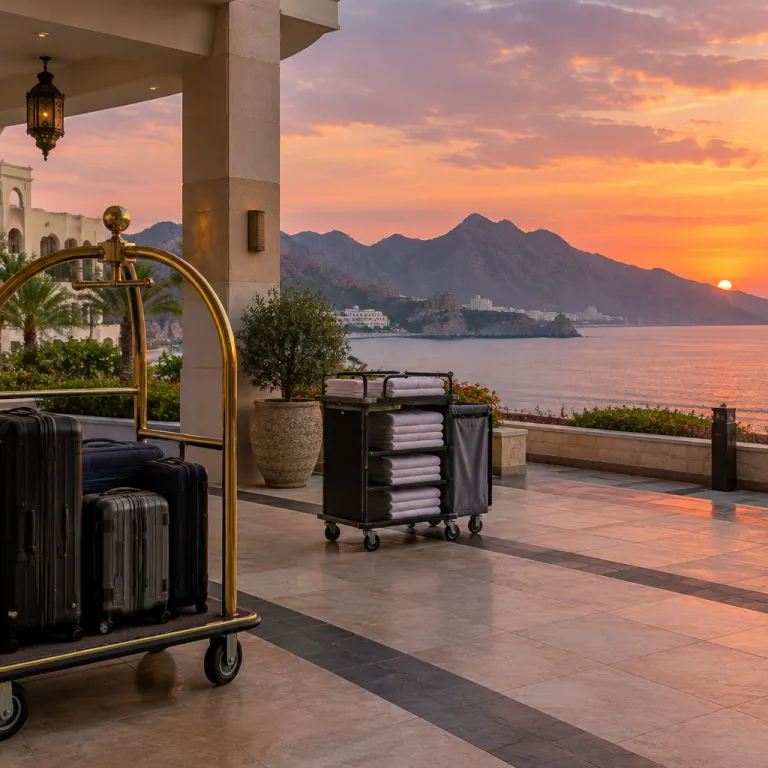
Muscat Oman as a luxury gateway to the Arabian Peninsula
Muscat, Oman sits between the Gulf of Oman and the Al Hajar Mountains, creating a dramatic setting for luxury hotels and coastal resorts. The capital city of the Sultanate of Oman has grown into a refined seaside hub where five-star properties line the waterfront yet the old trading-port character remains visible. For travellers choosing between resorts in Muscat and other parts of the country, the metropolitan area offers the most polished blend of culture, comfort, and easy logistics.
The meaning of Muscat in Arabic is often rendered as “safe anchorage”, and that heritage still shapes how the city welcomes guests. Historically a key trading port between East and West in the wider Middle East, the Omani capital evolved from a fortified harbour into a low-rise, whitewashed city with carefully controlled development nationwide. Today the Muscat economy balances petroleum production with tourism, finance, and logistics, which supports a sophisticated hospitality scene without overwhelming the Omani character of daily life.
For premium travellers, the climate is central to planning a stay in Muscat because the coastal heat defines how you use resort facilities. The most comfortable months for poolside relaxation and city exploration coincide with milder temperatures, while the hotter period encourages slow mornings in shaded courtyards and late afternoon visits to the corniche. Local tourism authorities highlight the cooler season from October to March as the ideal window for sightseeing and outdoor dining.
Choosing the right area in Muscat for your hotel
When you compare luxury hotels in Muscat, the first decision is which area of the city suits your style. The metropolitan area stretches along more than 30 kilometres of coastline, so staying near Muttrah, near the Grand Mosque, or in east Muscat will shape your daily rhythm. Many travellers pair a few nights in a beachfront resort with a night closer to the historic port to experience both sides of the Omani capital.
Muttrah, sometimes written as Matrah or Mutrah, is the historic harbour district where the old trading port once handled goods from the Gulf and the wider Arabian Peninsula. Here you can walk the corniche, visit Muttrah Souq, and feel how the local economy once depended almost entirely on maritime trade. Luxury and premium hotels near this area, such as Al Bustan Palace, a Ritz-Carlton Hotel, give quick access to the museum quarter and to traditional Omani restaurants serving grilled fish and fragrant rice.
Further west, near the Sultan Qaboos Grand Mosque and the ministries, you find large international brands that cater to business travellers and conference guests. This part of Muscat offers easy access to the main highways, Muscat International Airport, and embassies, making it ideal if you plan to combine meetings with leisure. In contrast, east Muscat and the quieter stretches of the Gulf of Oman coastline host resorts focused on wellness, privacy, and long beachfronts, including properties such as Shangri-La Barr Al Jissah and The Chedi Muscat.
Arriving in Muscat: airports, access, and regional connections
Most international guests arrive at Muscat International Airport (IATA code MCT), the main gateway to the country and a key hub on the Arabian Peninsula. The modern terminal at the international airport sits a short drive from central districts, so transfers to city hotels usually take 20–30 minutes outside peak traffic and cost roughly 8–12 OMR in an official taxi. Premium booking platforms often include private car services from Muscat International to your chosen property, which is worth considering in the heat.
Muscat also serves as a regional bridge between the United Arab Emirates and the rest of the Middle East, which influences how luxury travellers plan multi-stop itineraries. Many visitors fly into the Emirates, spend a few nights in Dubai or Abu Dhabi, then continue to Muscat for a calmer coastal stay. This combination highlights the contrast between the vertical skylines of the United Arab cities and the low, white architecture of the Omani capital along the Gulf of Oman.
For guests extending their trip beyond the city, Muscat’s role as capital of the Sultanate of Oman makes it the natural starting point for journeys into the interior. From here, private drivers and curated tours connect you to desert camps, mountain lodges, and coastal retreats such as the remote bays of Musandam. If you are considering a dramatic fjord-side escape after your time in Muscat, a refined guide to Zighy Bay and other luxury stays in Oman can help you compare resort styles and transfer logistics.
Formalities and practicalities on arrival
On arrival in Muscat, immigration procedures are usually efficient, but premium travellers should still check visa requirements in advance. The country has streamlined e-visa options for many nationalities via the official Royal Oman Police eVisa portal, which reduces waiting times at the international airport and allows you to reach your hotel quickly. Local guidance also reminds visitors to “Bring local currency (OMR); cards widely accepted.”
Once you exit Muscat International, you will notice that the city has no metro system yet, so taxis and private transfers remain the main way to reach hotels. Ride-hailing services operate alongside official airport taxis, and many luxury properties offer chauffeured cars that can be pre-booked through a booking website. Public buses connect some districts of the city, but for most premium guests, air-conditioned private transport is the most comfortable option in the local climate.
Where luxury meets heritage in Muscat’s urban fabric
Muscat stands out in the Middle East because modern development across Oman has not erased the Omani sense of place. Height restrictions keep the skyline low, so even the most contemporary hotels sit against a backdrop of mountains and sea rather than glass towers. This careful balance between the Muscat economy’s growth and heritage preservation shapes the ambience of every premium stay.
In the historic quarters near Muttrah and Old Muscat, you can feel how the city grew from a fortified harbour into the political capital of a confident country. The old port once welcomed traders from the Gulf, India, and East Africa, and that cosmopolitan history still echoes in the narrow lanes and restored houses. Today, many luxury properties in this area incorporate Arabic arches, carved wooden doors, and courtyards that recall the days when Muscat was primarily a trading port.
Modern resorts along the Gulf of Oman coastline often frame their design around Omani materials and traditional craftsmanship. Guests may sleep under high timber ceilings, walk across stone floors sourced from the Arabian Peninsula, and dine in spaces scented with frankincense from Dhofar. For an in-depth look at how one seafront property blends Omani calm with contemporary lines, you can read about an elegant stay at a leading Muscat coastal resort before choosing your own hotel.
Key cultural landmarks near premium hotels
Many luxury hotels in Muscat position themselves within easy reach of the Sultan Qaboos Grand Mosque, one of the city’s most important religious and architectural sites. This Grand Mosque, commissioned by Sultan Qaboos, welcomes non-Muslim visitors during specific morning hours, provided dress codes are respected. When planning your stay, remember the local advice to “Cover shoulders and knees in public places.”
Beyond the mosque, the museum landscape in the capital has expanded as part of broader development initiatives. Institutions such as the National Museum of Oman and Bait Al Zubair Museum showcase Omani history, maritime heritage, and traditional crafts, often through bilingual Arabic and English exhibits. Many premium hotels arrange private guided visits to these museum collections, allowing guests to understand how the Muscat economy evolved from maritime trade to petroleum development and diversified services.
In Old Muscat, the ceremonial palaces and forts remind visitors that the city remains the seat of the sultan and government. Haitham bin Tariq Al Said, the current Sultan and Prime Minister of Oman, continues the legacy of Sultan Qaboos in emphasising cultural preservation alongside economic reform. Walking these streets after sunset, then returning to a quiet luxury property, is one of the most atmospheric ways to feel the dual identity of Muscat as both modern capital and historic port.
Climate, best seasons, and how weather shapes your stay
The coastal climate of Muscat is hot and dry for much of the year, with humidity rising along the Gulf of Oman. This climate shapes everything from hotel pool design to spa opening hours, so understanding it helps you choose the right property. Many premium travellers time their visit to coincide with cooler evenings, when the city’s corniche and hotel terraces come alive.
During the October–March period, daytime temperatures are more comfortable for exploring the city, visiting the Grand Mosque, and wandering through Muttrah Souq. In the hotter season, luxury hotels in the capital respond with shaded cabanas, chilled pools, and late-night dining that suits the rhythm of the Middle East. Ramadan evenings can be particularly atmospheric, with lantern-lit courtyards and extended buffet hours in many upscale properties.
Because the metropolitan area stretches along the coast, micro-variations in breeze and exposure can make certain resorts feel slightly cooler than inner-city properties. Hotels facing the open Gulf of Oman often benefit from stronger sea breezes, while those set back near the mountains may feel warmer but more sheltered. When browsing a booking website, look for detailed descriptions of outdoor spaces, orientation, and shade, as these factors matter as much as room size in the Muscat climate.
Packing and etiquette for the Muscat climate
For Muscat, pack light breathable fabrics that respect local norms while keeping you comfortable in the heat. Even in luxury resorts, Omani culture values modest dress in shared spaces, especially when moving between the hotel and city attractions. This is why local advice emphasises “Cover shoulders and knees in public places.”
Sun protection is essential along the Gulf of Oman, where reflection from the sea and pale buildings can intensify exposure. Many premium hotels provide complimentary water, shade, and sometimes even cooling towels by the pool, but personal sunscreen and hats remain important. When planning excursions from the capital into the interior of the country, remember that temperatures can vary with altitude, so a light layer is useful for mountain evenings.
Hydration also affects how you experience the Muscat economy’s vibrant dining scene, from rooftop lounges to traditional Omani restaurants. Alcohol is available in many luxury hotels but restricted in stand-alone venues, reflecting the country’s cultural and legal framework. Balancing indulgence with the demands of the climate will help you enjoy both the city’s hospitality and its heritage sites without fatigue.
Culture, history, and the story behind Muscat’s luxury scene
Long before Muscat became a modern capital, it was a strategic harbour on the Arabian Peninsula. As a safe anchorage on the Gulf of Oman, the city attracted merchants from India, Persia, East Africa, and Europe, including Portuguese forces that occupied coastal forts from the early sixteenth century. This layered history explains why the city feels both cosmopolitan and deeply Omani, even as the Muscat economy modernises.
The old trading port at Muttrah once handled spices, textiles, and frankincense that moved between the Middle East and distant markets. Today, cruise ships dock nearby, and premium travellers step directly from the harbour into a city where forts, mosques, and museums sit alongside contemporary galleries and cafés. The National Museum of Oman and other museum institutions in the capital present this story through carefully curated Arabic and English articles, maps, and artefacts.
Islam, with a majority Ibadi population, remains the dominant religion in Muscat and shapes the rhythm of daily life. Prayer calls echo across the metropolitan area, and many luxury hotels incorporate quiet reflection spaces or orient their design toward the Grand Mosque. Respectful behaviour in public, including modest dress and sensitivity during prayer times, helps visitors align with local expectations in this part of the Middle East.
From petroleum development to diversified luxury tourism
For much of the recent past, petroleum development underpinned the Muscat economy and funded infrastructure across the Sultanate of Oman. Revenue from oil and gas allowed the country to build roads, schools, and hospitals, and to upgrade Muscat International Airport into a modern hub. Over time, national development strategies have shifted toward diversification, with tourism, logistics, and services playing a larger role.
This shift is visible in the growth of high-end hotels, cultural venues, and conference facilities throughout the capital. The city’s role as political and economic centre of the country attracts international events, which in turn support premium accommodation and dining. For travellers, this means a wider choice of properties, from urban resorts along the Gulf of Oman to intimate heritage conversions in the old city area.
As the capital of the Sultanate of Oman, Muscat also benefits from stable governance and long-term planning. Haitham bin Tariq Al Said, as Sultan and Prime Minister of Oman, oversees policies that balance economic growth with cultural preservation. This balance ensures that while the Muscat economy continues to evolve, the Omani character of the city remains intact for future guests.
Planning beyond Muscat: curated routes and meaningful stays
Many travellers use Muscat as a starting point for wider journeys across the country. After a few nights in the capital, you can head inland to oasis towns, forts, and mountain villages that reveal different facets of Omani life. These extensions pair well with luxury stays in the city, creating an itinerary that moves from coastal comfort to inland heritage.
One compelling route leads from Muscat along the interior to Bahla, where traditional mudbrick craftsmanship still shapes the urban landscape. For a deeper understanding of this heritage, a detailed feature on Bahla’s potters and the walled oasis offers valuable context before you travel. Returning to Muscat after such excursions, many guests appreciate the contrast between the quiet of the interior and the refined services of city hotels along the Gulf of Oman.
Coastal routes from Muscat toward Sur and the eastern capes reveal fishing villages, sea cliffs, and turtle nesting beaches. These journeys highlight how the country’s geography stretches from the mountains behind the capital to the open Arabian Sea, with the Gulf of Oman as a sheltered corridor. Luxury booking platforms often combine these experiences with nights in Muscat’s top properties, ensuring that guests enjoy both exploration and rest.
Choosing the right booking strategy for Muscat hotels
When selecting a luxury hotel in Muscat, consider not only star ratings but also how each property connects you to the city. Some hotels focus on business travellers linked to the local economy, offering extensive meeting spaces and proximity to ministries. Others emphasise wellness, beach access, and curated cultural experiences in partnership with museum institutions and local guides.
Reading detailed articles from trusted travel publications can help you compare service styles, room categories, and location advantages across the metropolitan area. Look for information on transfer times from Muscat International Airport, access to Muttrah and the Grand Mosque, and the availability of Omani-led cultural programming. A good booking website will also clarify cancellation policies, half-board options, and any seasonal climate considerations that might affect your stay.
Finally, remember that Muscat is both a modern city and a living capital of the Sultanate of Oman. Choosing hotels that respect Omani traditions, support local employment, and engage thoughtfully with the Muscat economy allows your stay to contribute positively to the country. In return, you gain a richer experience of a coastal capital where the legacy of a historic trading port meets the comforts of contemporary luxury.
Key figures and travel statistics for Muscat luxury stays
- The Muscat Governorate has a population of around 1.5 million people, making it the most populous region in Oman and the primary market for the country’s luxury hospitality sector (National Centre for Statistics and Information, Oman, latest available estimates).
- The Muscat Governorate covers approximately 3,500 km², which explains why hotel locations across the metropolitan area can feel very different in character and distance from key sights (Muscat Governorate official planning data).
- Muscat operates on UTC +4, so travellers from Europe and parts of Asia often experience minimal jet lag, which increases the appeal of short luxury breaks in the Omani capital (Omani government sources).
- Tourism infrastructure expansion and urban development in coastal and mountain zones are official priorities, signalling continued investment in premium hotels and related services across Muscat and the wider country.
- Economic diversification from oil and gas toward tourism and services is a stated national goal, which supports the long-term growth of the Muscat economy and its high-end hospitality offerings.
FAQ about luxury and premium stays in Muscat Oman
What does the name Muscat mean and why does it matter for travellers ?
The name Muscat is commonly translated as “safe anchorage” in Arabic, reflecting the city’s origins as a sheltered harbour on the Gulf of Oman. This maritime heritage still shapes the layout of the port, the corniche, and many waterfront hotels. For travellers, it explains why Muscat combines strong seafaring traditions with a relaxed coastal atmosphere.
What is Muttrah Souq and how close is it to luxury hotels ?
Muttrah Souq is a historic traditional market in Muscat, located near the old trading port and the corniche. Several premium hotels sit within a short drive of this area, making it easy to visit the souq in the cooler hours of the day. Guests often combine a stroll through Muttrah with a sunset walk along the harbour before returning to their city or beachfront property.
When is the best time to visit Muscat for a high end stay ?
The most comfortable period for luxury travel to Muscat is during the cooler months, when daytime temperatures are milder and humidity is lower. Local tourism advice summarises this clearly with the phrase “Visit October–March for best weather.” During this season, guests can enjoy outdoor pools, terrace dining, and city sightseeing with less heat stress.
What should I wear in Muscat’s public spaces and religious sites ?
In Muscat and across the Sultanate of Oman, visitors are expected to dress modestly in public, especially in malls, museums, and religious sites. Guidance commonly states “Cover shoulders and knees in public places,” which applies to both men and women. When visiting the Sultan Qaboos Grand Mosque, women should also cover their hair and wear loose clothing, while men should avoid shorts.
How do I move around Muscat from my hotel without a metro system ?
Muscat currently has no metro system, so most travellers rely on taxis, ride-hailing services, or private hotel transfers. Public buses operate on some routes, but they are less convenient for time-sensitive luxury itineraries. Many premium hotels in the city offer chauffeured cars or can arrange reliable drivers for airport transfers and day trips.