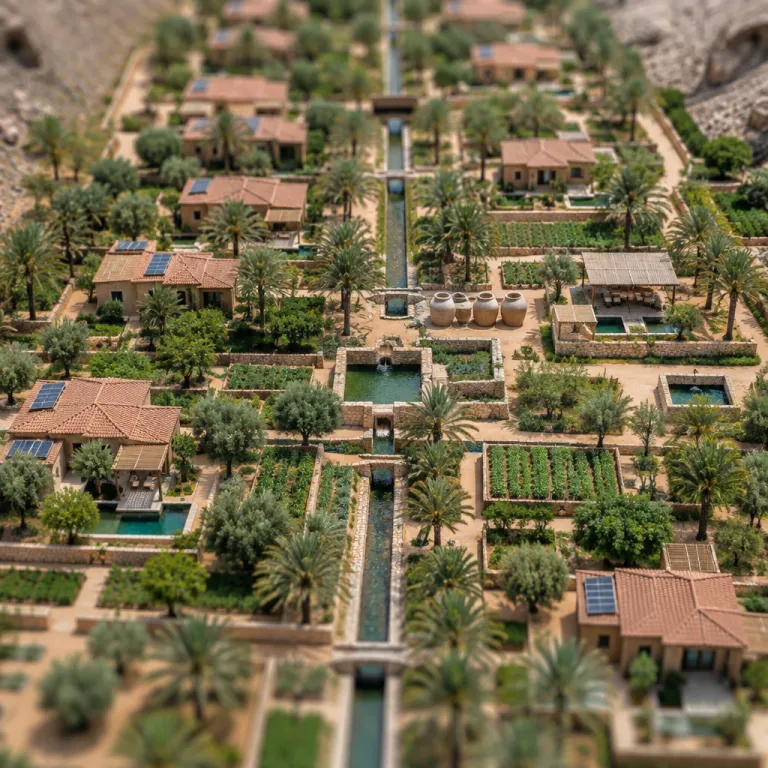
Oman aflaj sustainable tourism and the hidden architecture of water
Luxury in Oman begins with something deceptively simple, the quiet movement of water. Long before infinity pools and shaded cabanas, the aflaj irrigation systems carved through dry land and turned harsh valleys into green villages. Every time you check into a coastal palace or a mountain retreat, you are stepping into a story written by an ancient water management system that still shapes tourism in the Sultanate of Oman.
An individual falaj (plural aflaj) is a gravity-fed channel that carries water from a mother well or spring, through underground tunnels and open channels, into date gardens and village fields. These interconnected irrigation systems Oman developed are recognised as UNESCO World Heritage under the “Aflaj Irrigation Systems of Oman” listing, inscribed in 2006, because they combine engineering precision with social rules that govern timing, access and maintenance.[1] When you walk through old Oman heritage quarters in Nizwa or Birkat Al Mawz, you can see how each falaj system threads past mosques, homes and terraces, proving that sustainable development here has always been about shared water resources rather than private ownership.
The main idea behind oman aflaj sustainable tourism is simple yet demanding, luxury should never forget the falaj. Responsible hotels and resorts in tourism Oman now speak openly about water management, from how they protect nearby irrigation systems to how they reduce pressure on local mother wells. As a guest, you can ask how the property relates to nearby aflaj irrigation channels, whether its eco tourism narrative respects local water rights, and how its investment in landscaping reflects the fragile balance that keeps these systems flowing for the long term.
From falaj to family pool: what responsible luxury owes the aflaj
When you arrive at a Muscat grand hotel, the first impression is often water. Reflecting pools, cooled lobbies and lush lawns signal abundance, yet the real story of water resources in the Sultanate of Oman is one of scarcity and careful management. The contrast between a resort’s blue tiles and the dry hills beyond only makes sense when you understand how each falaj malki or falaj daris once carried life through bare rock to the villages below.[2]
In coastal properties such as the refined palace stay reviewed in our guide to the Ritz Al Bustan Muscat, the question is not whether there should be a pool, but how that pool relates to the surrounding eco system and historic irrigation systems. A thoughtful general manager will talk about desalination, greywater reuse and reduced lawn areas, explaining how the hotel’s water management plan avoids drawing from local aflaj water or stressing nearby irrigation systems Oman communities still depend on. Public data from Oman’s water authorities indicate that a substantial majority of the country’s potable supply now comes from desalination plants, so coastal hotels that rely on treated seawater rather than village wells are aligning with national sustainable tourism goals.[3]
Families booking premium rooms can use oman aflaj sustainable tourism as a lens for choosing where to stay, especially when comparing resorts that share the same coastline or valley. Ask whether the hotel supports maintenance of a nearby aflaj system, funds signage for UNESCO heritage falaj trails, or partners with local guides who explain how aflaj irrigation once fed the very land where the resort now stands. When a property treats aflaj, water and land as part of its long term investment rather than a backdrop, you know its version of eco tourism is grounded in Oman heritage rather than imported marketing.
Jabal Akhdar, aflaj and the green illusion in the high mountains
High above the plains, Jabal Akhdar looks improbably green from a distance. Terraced villages cling to the cliffs, and new luxury resorts promise cool air, panoramic pools and walks through rose gardens that seem to float above the canyons. Yet every petal and every blade of grass up here depends on a delicate balance between aflaj water, rainfall and the mountain aquifers that feed each falaj.
On the plateau often called the akhdar, or the Green Mountain, traditional villages still rely on aflaj irrigation systems that run along stone channels and through carved rock, distributing water according to long established schedules. These irrigation systems Oman communities maintain are part of the same UNESCO heritage inscription that protects falaj malki and falaj daris in the interior, reminding visitors that the eco system is as cultural as it is natural. When a resort markets itself as an eco tourism escape in Jabal Akhdar, the real test is whether its water management respects the limits of the local falaj system and the carrying capacity of the land.
Our overview of refined stays in Muscat shows how coastal hotels can lean on desalination, but in the mountains the equation is different and more intimate. Before booking, ask how the property separates its own system from village aflaj irrigation, whether it uses drought tolerant landscaping instead of lawns, and how it supports sustainable development projects that protect water resources for nearby villages. In the context of oman aflaj sustainable tourism, a Jabal Akhdar infinity pool only makes sense when the resort can show that every cubic metre of water is accounted for, reused where possible and never taken from a mother well that once fed terraced orchards below.
Walking the channels: where to see working aflaj near luxury stays
To understand why aflaj matter to your hotel choice, you need to stand beside one. In the interior of Oman, aflaj water still runs through open channels that cut across courtyards, under mud brick arches and along the edges of date plantations, making the abstract idea of irrigation systems suddenly tangible. A short detour from a highway resort can take your family into villages where the sound of running water is the only noise, and where sustainable tourism feels less like a slogan and more like a lived routine.
Nizwa is an ideal base for this, pairing comfortable city hotels with easy access to Falaj Daris, one of the best known examples of a large aflaj system and part of the UNESCO World Heritage group.[2] Nearby, smaller villages show how a single falaj irrigation line can feed multiple plots of land, each managed by local families according to inherited time slots that function as a social water management system. When you combine a morning at the fort with an afternoon exploring the aflaj channels, then return to your hotel pool, the link between oman aflaj sustainable tourism and your own stay becomes impossible to ignore.
For families travelling with children, pairing aflaj walks with market visits works particularly well, and our guide to Oman’s living souqs with children offers a practical route. From there, you can continue toward Jabal Akhdar, stopping in Birkat Al Mawz to see how a falaj system once irrigated vast date gardens that are now slowly being restored as part of eco tourism and sustainable development projects. Each of these stops turns abstract terms like UNESCO heritage, Oman sustainable practice and tourism Oman policy into real channels, real land and real communities that still depend on the same systems Oman engineers and farmers built centuries ago.
How to book hotels that respect Oman’s aflaj heritage
Choosing a luxury hotel in Oman through a curated platform such as myomanstay.com is not only about thread count and pool design. For travellers who care about oman aflaj sustainable tourism, the booking process is also a quiet referendum on which properties understand that aflaj, water and land are finite, shared resources. A few targeted questions before you confirm a reservation can reveal whether a hotel’s eco claims are genuine or just decorative.
Start by asking where the property’s water comes from, and whether any part of its supply is linked to local aflaj irrigation or a nearby mother well that also serves villages. A responsible general manager should be able to explain the hotel’s water management system, including greywater reuse, low flow fixtures and landscaping choices that reduce pressure on irrigation systems Oman communities rely on. When a property can show that its investment in pools and gardens is balanced by support for aflaj system maintenance, UNESCO heritage interpretation or local training in sustainable tourism, you are looking at oman sustainable practice rather than marketing.
Next, look for evidence that the hotel engages with Oman heritage beyond décor, perhaps by funding signage along falaj malki trails, supporting research on aflaj irrigation systems or hosting talks on eco tourism and sustainable development in the Sultanate of Oman. Families can ask for child friendly walks along nearby channels, turning a simple stroll into a lesson on how a falaj system works and why aflaj water still matters to modern tourism Oman wide. When you book this way, you are not only securing a refined stay, you are voting for a version of luxury that honours the systems that made Omani oases, and your resort, possible.
FAQ
What is an aflaj irrigation system in Oman ?
An aflaj irrigation system in Oman is a traditional network of underground and surface channels that carries water from a mother well or spring to fields, gardens and villages using gravity alone. Each falaj is managed collectively, with local communities sharing water rights through timed allocations that function as a social as well as technical system. Several of these irrigation systems Oman maintains are recognised as UNESCO heritage because they represent a sophisticated form of sustainable water management in an arid environment.[1]
Why does understanding aflaj matter when booking a luxury hotel ?
Understanding aflaj matters because many Omani resorts sit in landscapes that were only made habitable by these irrigation systems, and their current water use can affect nearby villages. When you know how a falaj system works, you can ask informed questions about a property’s water management, from whether it draws on local water resources to how it supports aflaj maintenance or interpretation. This awareness helps you choose hotels that align with oman aflaj sustainable tourism and contribute positively to Oman heritage rather than placing extra pressure on fragile eco systems.
Can families visit working aflaj near major tourist areas ?
Yes, families can visit working aflaj near several major tourist hubs, including Nizwa, Birkat Al Mawz and the approaches to Jabal Akhdar. Short walks along falaj channels allow children to see how aflaj water is divided between fields and how local farmers still rely on these systems for irrigation. Many hotels can arrange guided visits that explain the link between aflaj irrigation, sustainable tourism and the green gardens that surround modern resorts.
How can I tell if a hotel in Oman is genuinely sustainable with water ?
A genuinely sustainable hotel in Oman will be transparent about its water sources, its use of desalination or wells, and its greywater reuse and landscaping strategies. It should be able to explain how its operations avoid drawing from local aflaj irrigation systems or mother wells that serve nearby villages, and ideally show involvement in projects that protect UNESCO heritage aflaj or support local water management initiatives. When a property treats water as part of a shared system rather than a private amenity, it aligns more closely with oman sustainable principles and responsible tourism Oman wide.
Where can I see UNESCO listed aflaj while staying in comfort ?
Travellers can base themselves in comfortable hotels in Nizwa or nearby towns and make short excursions to see UNESCO listed aflaj such as Falaj Daris, as well as other notable systems in the interior. From Muscat, day trips or overnight circuits can include visits to villages where aflaj channels still run openly through streets and gardens, often combined with fort tours and market visits. This combination of refined accommodation and close contact with working irrigation systems offers a practical way to experience oman aflaj sustainable tourism without sacrificing comfort.
References: [1] UNESCO World Heritage Centre, “Aflaj Irrigation Systems of Oman,” inscribed 2006. [2] Government of Oman heritage documentation on Falaj Daris and other aflaj systems. [3] Public reports from Oman’s water authorities indicating that most potable water is produced by desalination; exact percentages vary by year and region.